Lower Levels Are Where Kirkland's Rain Ends Up
When the ground is saturated after days of rain, water moves through soil toward the lowest, coolest surfaces it can find: basement walls, slab joints and crawl spaces. In Kirkland that happens most in November through March, and more on hillside lots and near the lake. Add a failed sump pump or a plumbing leak above, and a lower level can take on water fast. Extraction and thorough drying are what keep it from becoming a rebuild, and they're the core of any flooded basement cleanup.
Lower levels also hide water well. Carpet over a slab feels only slightly damp while the pad underneath is soaked. Water in a crawl space can sit on the vapor barrier unseen, raising humidity under the whole house.
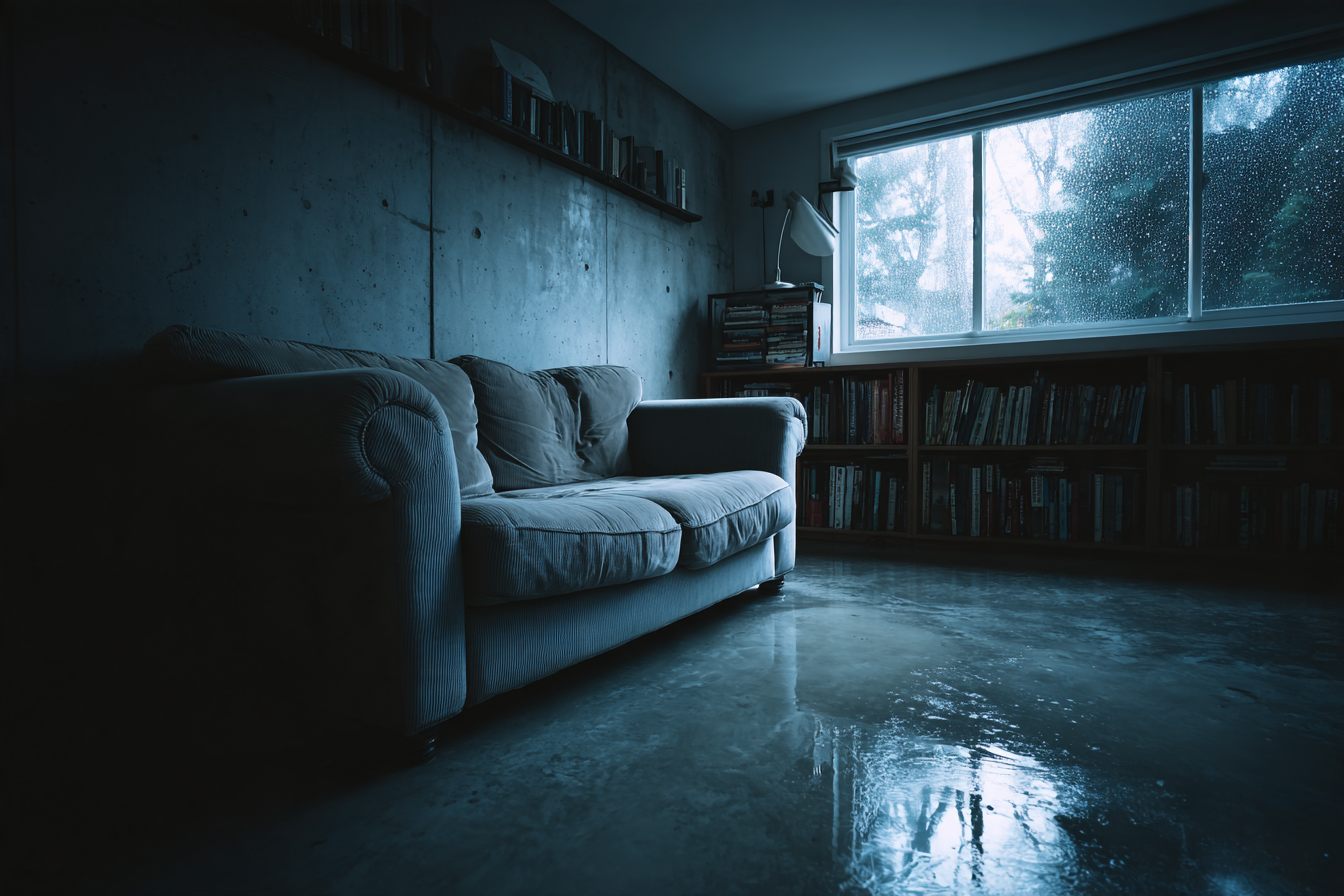
Finished Basements: What Usually Stays and What Goes
| Material | Clean water, extracted quickly | Outside or contaminated water, or a long soak |
|---|---|---|
| Carpet | Sometimes dried and relaid | Removed |
| Carpet pad | Usually replaced | Removed |
| Drywall | Often dried in place | Cut above the wet line |
| Batt insulation behind finished walls | Taken out where it's soaked through | Taken out |
| Engineered or laminate floor | Depends on the product and how long it sat | Usually replaced |
| Built-ins and cabinets | Solid wood often dries; particleboard swells | Usually replaced |
The full decision guide: finished basements after a leak.
Crawl Spaces and Vapor Barriers
Many Eastside homes, especially older ones, sit over a crawl space. Water there pools on top of the plastic vapor barrier or soaks the soil, and the insulation fastened under the floor absorbs it. Getting it dry usually means pumping the standing water, pulling down wet insulation, sometimes replacing the vapor barrier, and running a dehumidifier under the house until readings come down. The floor above can look perfect the whole time.
Water in the basement or crawl space?
Speak with an Eastside water removal company: (425) 437-2143.
Call (425) 437-2143Where the Water Comes From
- Hillside runoff, collecting at the uphill wall of a house built into a slope. See hillside lots and water at the uphill wall.
- High groundwater near the lake and Juanita Bay. See waterfront lots and high groundwater.
- Overflowing gutters dumping water beside the foundation.
- Sump pumps that stop when a windstorm takes out the power. See sump pumps and power outages.
- Plumbing above: a water heater, washer or bathroom leak draining down.
Why Does Water Show Up in a Basement After Days of Rain?
Because the soil around the house can only hold so much. After a long wet stretch it's saturated, and water under pressure finds small gaps in foundation walls, slab joints and window wells. It often appears a day or two after the heaviest rain, which surprises people.
Basement Flood Cleanup Takes Longer to Dry
Lower levels need more drying time than main floors: concrete and dense materials release moisture slowly, and cool basement air holds less of it. Carpet may be floated on air movers while the pad is replaced, baseboards come off so air reaches the bottom of the walls, and a dehumidifier sized for the space runs continuously. Expect dehumidifiers to run several days with daily readings. More on drying & repairs and on water extraction.
Signs That Water Is Getting Below the Main Floor
Lower-level water rarely announces itself with a puddle in the middle of the room. More often it shows up as one of these:
- carpet that feels cool or slightly damp along an outside wall
- a musty smell that gets stronger during the rainy months
- white, chalky crust on concrete walls or the slab
- paint bubbling or peeling near the bottom of a wall
- a sump pump that runs constantly, or one you can't hear at all during a storm
- higher humidity upstairs, or floors that feel soft over the crawl space
Any one of them is worth a moisture reading. A restoration company can tell in a few minutes whether the wall or slab is actually wet, and whether the water is coming from outside or from plumbing.
Daylight Basements and Split-Levels
Much of Kirkland's housing is built into hills, so many lower levels are only partly below ground. The downhill side has windows and a door to the yard; the uphill side is buried. Water damage in these homes usually starts on the buried side, where saturated soil presses against the foundation, and then spreads across the slab toward the open side.
That pattern shapes the drying. The buried wall stays cool and slow to dry, so the lower part of its drywall often comes off to let air reach the cavity and the back of the concrete. The rest of the room may dry quickly by comparison. In split-levels, water on the lowest floor can also wick up the framing of the short stairway and into the family room above, so readings need to cover more than the obvious room.
Who Handles the Cause
Restoration covers getting the lower level dry and putting the finishes back. The source is often a separate job. Footing drains, regrading, downspout extensions, a new sump pump or foundation waterproofing usually go to a drainage contractor, a plumber or a waterproofing company. A good restoration company will tell you what it saw and where the water came in, so whoever handles the cause knows where to look.
Rebuilding the finishes before the cause is fixed is the most common way a basement floods twice. If the water came from outside, ask about the cause before the new drywall goes up.
Is Basement Seepage Covered by Homeowners Insurance?
Often not, when it's groundwater or surface water working through the foundation; many policies exclude both. Water from a burst pipe or a failed water heater in the same basement usually is covered, and sump backup may be covered if you've added that endorsement. The paperwork side is in moisture logs.
Basement and Crawl Space Help Around the Lake
Kirkland
- Finn HillKirkland
- JuanitaKirkland
- KingsgateKirkland
- Totem LakeKirkland
- Rose HillKirkland
- HoughtonKirkland
- LakeviewKirkland
- Moss BayKirkland
- Market & NorkirkKirkland
- Bridle TrailsKirkland
Nearby