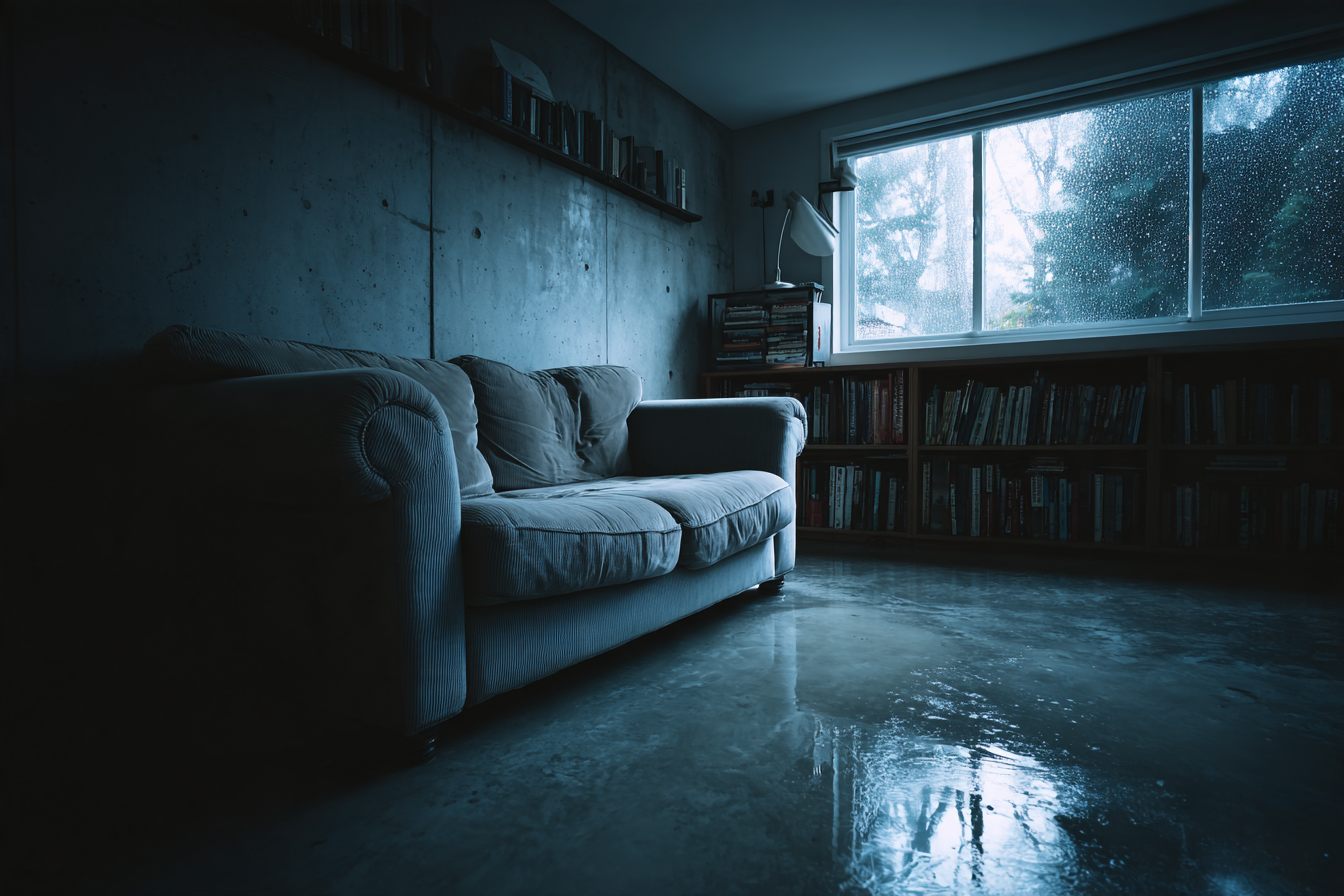
On the Eastside, the storms that bring the most rain often bring the most wind too. Tall trees and overhead lines mean power outages are a regular part of winter around Kirkland. For a house that depends on a sump pump to keep its lower level or crawl space dry, that combination is the worst case: the water is rising and the pump has no power.
What Does a Sump Pump Do?
It sits in a pit at the lowest point of a basement or crawl space, where perimeter drains collect groundwater. When the water in the pit reaches a set level, a float switch turns the pump on and it pushes the water out through a discharge pipe, away from the house. Without it, that water rises into the space.
Why Do Sump Pumps Fail?
| Cause | What happens |
|---|---|
| Power outage | The pump stops while the ground is still full of water |
| Stuck float switch | The pump never turns on, or never turns off and burns out |
| Clogged intake or pit | Silt and debris block the pump |
| Frozen or blocked discharge | Water has nowhere to go |
| Undersized or aging pump | It can't keep up during a long storm |
Pump stopped and the lower level is wet?
Speak with an Eastside water removal company: (425) 437-2143.
Call (425) 437-2143Backup Options
- Battery backup pump: a second pump that runs on a battery when the power fails, usually for several hours depending on the battery and how often it cycles.
- Water-powered backup: uses household water pressure to remove water; works without electricity but uses municipal water and isn't allowed or practical everywhere.
- Generator: keeps the main pump running through a long outage if it's connected safely.
- High-water alarm: a cheap sensor that sounds or sends a phone alert when the pit is close to overflowing.
How Often Should a Sump Pump Be Tested?
Before the rainy season and every few months during it. Pour water into the pit until the float lifts and confirm the pump runs and the water leaves through the discharge. Test the backup the same way with the main pump unplugged. Check that the discharge outlet outside isn't buried, crushed or blocked by leaves.
Sizing and Age
Sump pumps don't last forever; many need replacing every several years, sooner if they run often. An undersized pump may keep up most of the time and fall behind only in the biggest storms, which is exactly when it matters. If your pump runs continuously during heavy rain, or the water in the pit rises close to the top while it's running, a plumber can check whether it's the right size and whether the discharge line is restricted.
Discharge Lines
Where the water goes matters as much as the pump. A discharge line that empties right beside the house sends water back into the soil it just came from, and the pump ends up cycling the same water. Lines buried under lawns can be crushed or clogged with roots. The outlet should carry water well away from the foundation, to a spot where it can drain or reach the storm system. Ask about local rules before connecting a sump to a sanitary sewer; in many places that's not allowed.
Crawl-Space Sumps
Crawl-space sumps are easy to forget because nobody goes down there. Check the pit before winter, make sure the float moves freely, and confirm the cord and outlet aren't sitting in water. Some homeowners add a remote alarm so they hear about a problem without crawling under the house during a storm.
What If the Power Is Out and the Water Is Rising?
Stay off a wet floor where cords or appliances are plugged in, and don't run a generator indoors or in a garage. If you have a battery backup, check that it's running. Move what you can upstairs, take photos, and call a restoration company to schedule extraction when it's safe to start.
Noises Worth Paying Attention To
A sump pump that's working makes a short hum and a gurgle each time it runs, then goes quiet. Listen for changes: a pump that runs and runs without shutting off may have a stuck float or a blocked discharge; grinding or rattling can mean debris in the impeller; a pump that's silent during a heavy storm may have lost power or failed. Clicking with no pumping often means the motor is trying and failing. Any of those is worth a plumber's visit before the next big rain.
When It Fails Anyway
Once water is above the pit, it spreads across the slab, into carpet and pad, and up the bottom of the drywall. It has to be extracted and the room dried with equipment. In a cool basement in winter, nothing dries on its own. The process is on water extraction and basements & crawl spaces. For a finished lower level, see what can be saved.
Insurance Note
Sump failure and water backup are often excluded from standard homeowners policies unless you've added a specific endorsement. It's worth checking your policy before the season starts.
Where Sumps Are Common
Larger homes with finished lower levels in Bridle Trails and Kingsgate, and river-valley neighborhoods in Bothell.

Atmospheric Rivers and Eastside Homes
Why multi-day storms cause more damage than a single heavy one.
Finished Basements After a Leak: What Can Be Saved
A material-by-material look at keep, dry or replace.