Restoration Is Measured, Not Eyeballed
Water damage restoration in Kirkland covers everything after extraction: mapping where moisture went, drying the structure with air movers and dehumidifiers, removing what won't recover, and rebuilding. The finish line is a set of moisture readings that match unaffected parts of the house, not a floor that feels dry. In the cool, damp Puget Sound air, that distinction is the difference between a clean repair and a smell that comes back.
Insurers split the job into two parts. Water mitigation, sometimes called water damage remediation, is the emergency phase: extraction, tearing out what can't be saved, and drying, all aimed at keeping the damage from spreading. Water damage repair comes after: drywall, flooring, cabinets and paint. Many restoration companies do both; some hand the repair to a separate contractor.
Moisture Mapping
Before equipment goes in, the restoration company maps the damage with pin and pinless meters and a thermal camera, and records readings from a dry room as the target. The map shows which walls, floors and cabinets are wet and how far the water traveled. It also becomes the core of your insurance paperwork: moisture logs and what adjusters want.
The Drying Rail
- Setup: air movers push air across wet surfaces; dehumidifiers pull that moisture out of the room.
- Openings: baseboards or toe kicks come off, and small holes may be drilled to reach wall cavities.
- Daily readings: each material is checked against its target, and equipment is moved where it's needed.
- Dry standard: readings match the reference room, and the equipment comes out.
A typical household leak takes about three to five days. Finished basements, hardwood and crawl spaces take longer. What it's like to live with the equipment: living with drying equipment.
Walls or floors still damp?
Talk it through with a local restoration company: (425) 437-2143.
Call (425) 437-2143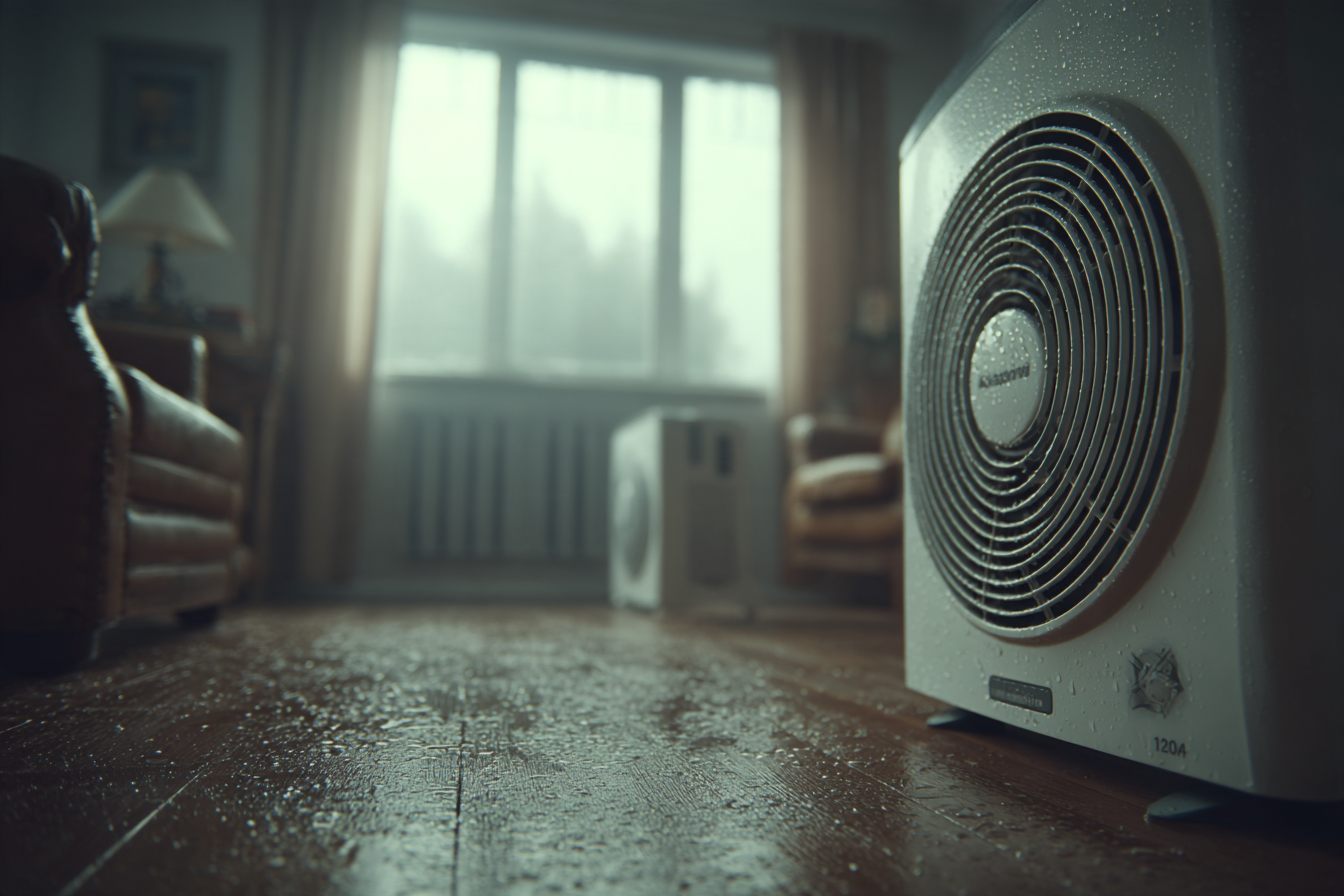
How Common Materials Respond
| Material | Typical outcome with prompt drying |
|---|---|
| Solid hardwood | Often recovers; may need refinishing |
| Engineered wood | Depends on the core; some delaminate |
| Laminate | Usually replaced once swollen |
| Drywall | Dried in place if caught early; cut out if soft or long-soaked |
| Plaster (older homes) | Usually dried in place, slowly |
| Solid wood cabinets | Usually recover |
| Particleboard cabinets | Usually replaced if swollen |
More on floors: hardwood and engineered floors after water.
Water Damage Repair and Rebuilding
Once readings confirm the structure is dry, the water damage repair work begins: insulation, drywall, texture and paint, flooring, trim and cabinets. In homes with higher-end finishes, matching existing flooring or millwork can take time, and some companies handle the rebuild themselves while others hand it to a contractor. Ask which at the start.
Cost and Paperwork
The bill depends on how much water there was, how long it sat, what kind of water it was and what has to be replaced. The factors are laid out in what moves the price of water extraction and drying. Keep the moisture logs and the itemized scope; your insurer works from both.
Why Drying Takes Real Equipment Here
In a dry climate, an open window helps. In Kirkland between October and May, outdoor air is usually cool and close to saturated, so it can't take much more moisture out of a wet house. Leaving the windows open often makes drying slower, not faster. That's why restoration companies keep the house closed and let dehumidifiers create dry air inside, while air movers pull moisture out of surfaces and into that air.
The same weather is why lower levels and crawl spaces are slow. Concrete and cool framing release water reluctantly, and the job ends when the readings say so, not after a set number of days.
What Happens at Each Daily Visit
During drying, a technician usually stops by each day to:
- take readings at the marked points and log them
- compare those readings with the dry standard from an unaffected room
- move air movers toward the areas that are still wet
- empty or check the dehumidifier drains
- decide whether more material needs to come out, or whether a room is finished
Those visits are short, but they're the most important part of the job. A record that shows steady progress from wet to dry is what tells you, and your insurer, that the structure is ready to close up.
What to Ask a Restoration Company
Before drying starts, it's reasonable to ask:
- How will you decide when the structure is dry, and will I get the readings?
- Which materials do you expect to remove, and why?
- Will you handle the rebuild, or hand it to another contractor?
- Do you work with my insurer directly, and will I see the scope before it's sent?
- What's your Washington L&I registration number?
Clear answers to those questions are a good sign. Vague ones, pressure to sign before you understand the paperwork, or promises about what your insurer will pay are reasons to slow down. More about checking a company is on how it works.
Belongings, Furniture and Contents
Drying the structure is only part of the job. Furniture, rugs, clothing, papers and electronics in the wet rooms need attention too. Many restoration companies offer contents work: moving belongings out of the drying zone, cleaning and drying what can be saved, and listing and photographing what can't for the insurance claim. Some items, like photographs and important documents, can be frozen and dried later by specialists. Ask early whether contents are part of the scope, since that changes how the rooms get set up.
Can the Repairs Start Before Everything Is Dry?
Some can, in rooms that are already dry. Wet areas shouldn't be closed up until readings confirm it. Drywall hung over damp framing, or flooring laid on a damp subfloor, traps moisture that comes back as odor, cupping or staining a few weeks later.
Drying and Repairs Around the Lake
Kirkland
- Finn HillKirkland
- JuanitaKirkland
- KingsgateKirkland
- Totem LakeKirkland
- Rose HillKirkland
- HoughtonKirkland
- LakeviewKirkland
- Moss BayKirkland
- Market & NorkirkKirkland
- Bridle TrailsKirkland
Nearby
Main page: water damage in Kirkland.