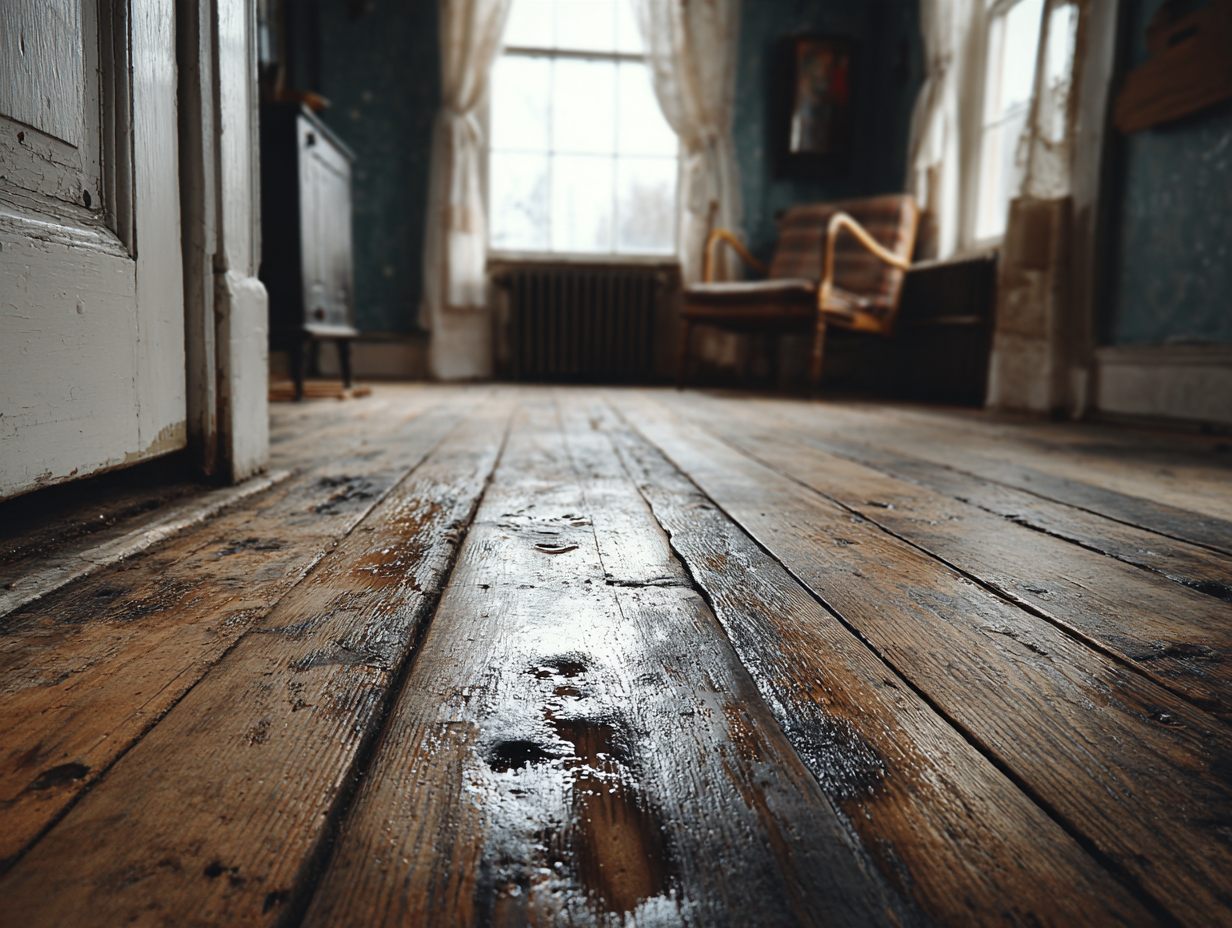
Wood floors are common in Eastside homes, from original oak in older Kirkland houses to wide-plank engineered floors in newer ones. After a leak, flooring is often the most expensive thing at stake and the hardest to judge by eye. A floor can look fine on day one and cup on day four, or look terrible at first and lie flat again after proper drying.
How Different Floors Respond
| Floor type | What water does | Typical outcome |
|---|---|---|
| Solid hardwood | Boards absorb water and swell; edges rise (cupping) | Often recovers with controlled drying; may need sanding and refinishing |
| Engineered wood | Wood veneer over a plywood or fiberboard core | Plywood cores often recover; fiberboard cores and some glues delaminate |
| Laminate | Fiberboard core swells at the seams | Usually replaced once swollen |
| Luxury vinyl plank | Surface is waterproof; water sits underneath | Can often be lifted, dried under, and reinstalled |
What Is Cupping, and Will It Go Away?
Cupping is when board edges sit higher than the centers because the underside absorbed more water than the top. With careful drying from below and above, cupped solid hardwood often flattens over days to weeks. Sanding a cupped floor before it's dry is a classic mistake: once it dries, the boards crown and the finish is ruined.
Wood floor wet or starting to cup?
Talk it through with a local restoration company: (425) 437-2143.
Call (425) 437-2143How Drying Decisions Get Made
A restoration company will:
- Read moisture in the boards and the subfloor, and compare them with dry floor elsewhere in the house.
- Decide whether to dry in place (often with specialized floor-drying mats that pull moisture from the wood), lift sections, or remove the floor.
- Track readings daily until the wood reaches its normal moisture level.
- Leave refinishing or replacement decisions until the floor has stabilized.
What to Avoid in the First Days
- Don't sand, refinish or nail down lifting boards.
- Don't run heaters aimed at the floor; uneven heat causes cracking.
- Don't cover wet wood with rugs or plastic.
- Don't assume it's fine because the surface feels dry.
Crowning, Buckling and Gaps
Cupping isn't the only way wood reacts. Crowning is the opposite: board centers sit higher than the edges, usually because a cupped floor was sanded flat before it dried. Buckling happens when boards swell so much they push up off the subfloor entirely; it usually needs that section replaced. Gaps can appear weeks later, when over-dried boards shrink. Controlled drying, with readings on both the boards and the subfloor, is what avoids the extremes.
Floors Over Crawl Spaces and Basements
A wood floor over a wet crawl space or basement can be damaged from below even if nothing spilled on it. High humidity under the house moves up into the subfloor and the boards, causing slow cupping over weeks. If a floor starts cupping for no obvious reason, check the space underneath. The fix there is drying and dehumidifying the crawl space, and the floor may then settle on its own.
How Long Does Hardwood Take to Dry?
Usually longer than the rest of the room. Drywall might be dry in three days while the floor needs a week or more, and the subfloor underneath may lag behind the boards. Specialized floor-drying systems speed that up by pulling air through the wood under a mat. Patience pays here; most refinishing problems come from finishing too soon.
Rugs, Furniture and Wood Floors
Furniture and rugs left on a wet wood floor slow the drying under them and can stain the finish. Metal feet and casters leave rust rings; dyed rugs bleed color into the wood. Lift furniture onto blocks or move it out, and roll up area rugs so the floor can breathe. If a rug is valuable, ask about professional cleaning. These small steps protect the floor while the restoration company sets up the drying. Keep foot traffic off the wet area as much as you can too; damp wood dents and scuffs far more easily than dry wood, and grit tracked across a softened finish leaves scratches that show once the floor is refinished.
Insurance and Matching
When part of a floor has to be replaced, matching the rest can be hard, especially with older solid hardwood or discontinued engineered products. Policies differ on whether they pay to replace undamaged flooring so everything matches. Ask your adjuster early, and keep a few pieces of the damaged boards so the species, width and finish can be matched.
Floors Above and Below
Water from an upstairs leak runs along the subfloor under wood flooring before it shows. A wet floor upstairs often means a wet ceiling below, and the reverse. See upstairs leaks and kitchens, baths & laundry.
Older Homes With Original Floors
Original solid hardwood in older neighborhoods like Market & Norkirk is usually worth the patience it takes to dry, since matching it later is hard. Condos in Lynnwood and downtown more often have engineered or vinyl plank, which changes the approach.
More on the drying process: drying & repairs.
Finished Basements After a Leak: What Can Be Saved
A material-by-material look at keep, dry or replace.
Living With Drying Equipment for a Few Days
Noise, power, pets and whether to stay home.