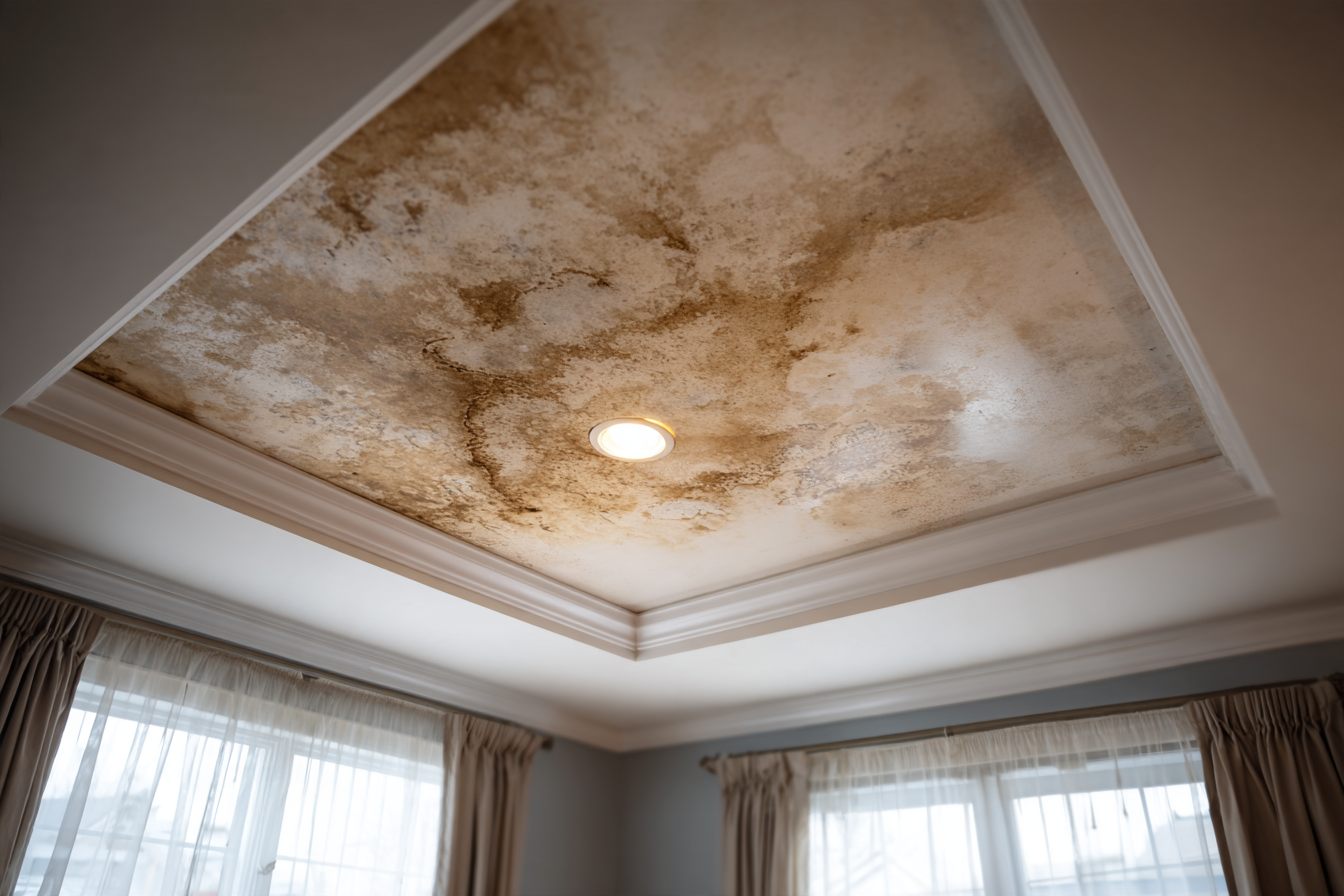
Many newer homes around Kirkland put the laundry room upstairs, next to the bedrooms. It's convenient until a washer hose splits. Second-floor bathrooms sit over kitchens and family rooms in the same way. When water escapes on an upper floor, it doesn't stay there: it soaks the subfloor, runs along joists and comes down through ceilings, light fixtures and walls below.
Where Do Upstairs Leaks Usually Start?
| Source | How it behaves |
|---|---|
| Washing machine hose | Bursts at full pressure; lots of water fast |
| Washer drain overflow | A clogged standpipe overflows each cycle |
| Toilet supply line or wax seal | Slow seep into the subfloor, often unnoticed for weeks |
| Shower valve or drain | Leaks inside the wall cavity; stains appear below or beside |
| Tub overflow or caulking | Water runs behind the tub surround |
| Water heater in an upstairs closet | Rust-through at the tank bottom |
How Far Does the Water Travel?
Further than it looks. Water follows the subfloor and joists, so the stain below may be a room away from the source. It collects on top of ceiling drywall until it shows, and drips through light fixtures and recessed cans. It can run down inside a wall to the floor below and come out under baseboards. That's why mapping comes before any opening. See ceilings & upper floors.
Water through the ceiling from upstairs?
Get the water out and the drying started: (425) 437-2143.
Call (425) 437-2143What Should You Do When You Find One?
Turn off the water to the fixture or the house, switch off lights in the room below if water is near fixtures, and keep everyone out from under any sagging ceiling. Then the work is extraction upstairs, opening the wet ceiling below, drying the joists and subfloor, and patching once readings are good.
Why Upstairs Leaks Get Big Fast
A washer hose that splits sends water out at full household pressure, many gallons a minute, until someone shuts it off. If it happens while the family is at work or asleep, water can run for hours. On an upper floor, there's no slab to stop it: it soaks the carpet or vinyl, the subfloor underneath, and then the ceiling drywall below, which holds it until it gives way. One split hose can damage a laundry room, a hallway, a bedroom and the kitchen ceiling under all of them.
Signs of a Slow Upstairs Leak
Not every upstairs leak is dramatic. Watch for:
- a toilet that rocks, or a soft spot in the floor around it
- caulk that keeps cracking where the tub meets the floor
- a faint stain or bubbling paint on the ceiling below a bathroom
- a musty smell in a closet that backs onto a bathroom
- grout lines that stay dark long after a shower
Any of those is worth a moisture reading before it turns into a ceiling repair.
Is an Upstairs Leak Usually Covered by Insurance?
A sudden failure, like a split hose or a cracked supply line, is commonly covered under homeowners policies. Damage from a slow leak that went on for weeks often isn't, because policies tend to exclude gradual seepage and wear. Keep the failed part, take photos before cleanup, and let the restoration company's readings show how far the water went. See moisture logs.
Opening the Ceiling Below
To dry the space between floors, the wet section of ceiling below usually has to come down, or at least be opened. That's normal, and it's far cheaper than leaving wet framing sealed up. The patch is done after the readings confirm everything is dry.
Furniture and Belongings Below
The room under the leak usually takes the most damage to belongings. Water dripping from a ceiling lands on beds, couches, electronics and rugs. Move what you can, cover what you can't with plastic sheeting, and put buckets under drips. Don't stand on furniture to inspect a wet ceiling, and keep clear of any section that's bulging. Take photos of damaged items before moving them; they're part of the claim along with the structure. Electronics that got wet should stay unplugged until someone has checked them, and mattresses or upholstered furniture soaked from above usually need professional cleaning or replacement rather than a few days by a fan.
Prevention That Works
- Replace rubber washer hoses with braided stainless ones, and replace those every several years.
- Put a drain pan under an upstairs washer, plumbed to a drain if possible.
- Add a water leak sensor (or an automatic shutoff valve) in the laundry room and beside upstairs toilets.
- Re-caulk tubs and showers when caulk cracks or pulls away.
- Have an upstairs water heater checked as it ages.
Where This Is Most Common
Newer two-story homes in Redmond, Kingsgate, South Rose Hill and the Sammamish plateau, and townhomes with upper-floor laundry in Totem Lake.
Afterward
Ceiling and subfloor drying usually takes several days with equipment. Closing the ceiling before the framing is dry traps moisture and invites odor and mold. More on drying & repairs.

Condos and Townhomes: When the Water Comes From Next Door
Associations, unit owners and insurers, in plain terms.
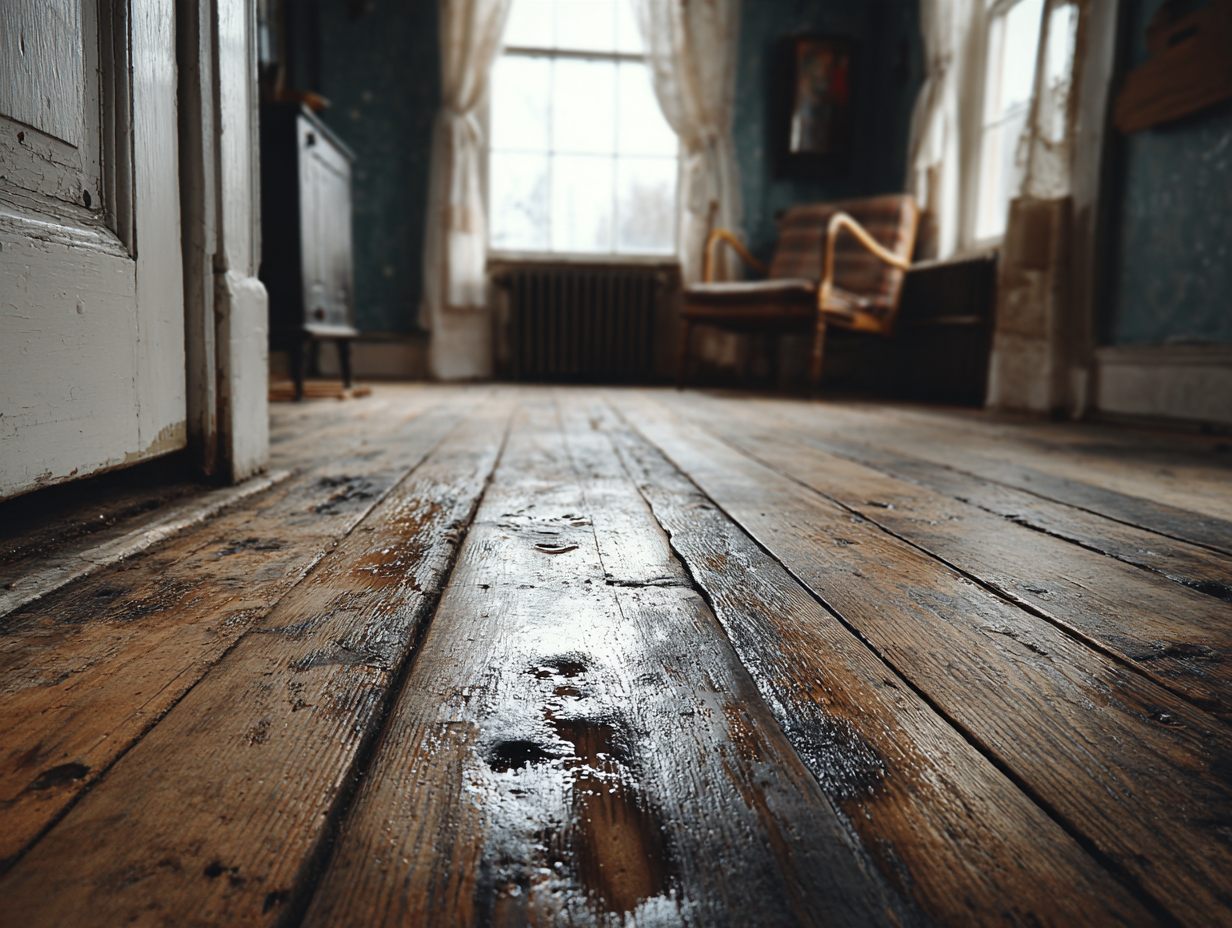
Hardwood and Engineered Floors After Water
How flooring decisions get made, and what to avoid in the first days.