A Stain Is the Last Sign, Not the First
By the time water shows on a ceiling, it has usually soaked the subfloor above, run along the joists and saturated the top of the drywall. In two-story Eastside homes the usual sources are an upstairs bathroom, a second-floor laundry room or, in the rainy season, the roof and gutters. Drying a ceiling properly means opening the wet area, drying the framing and only then patching.
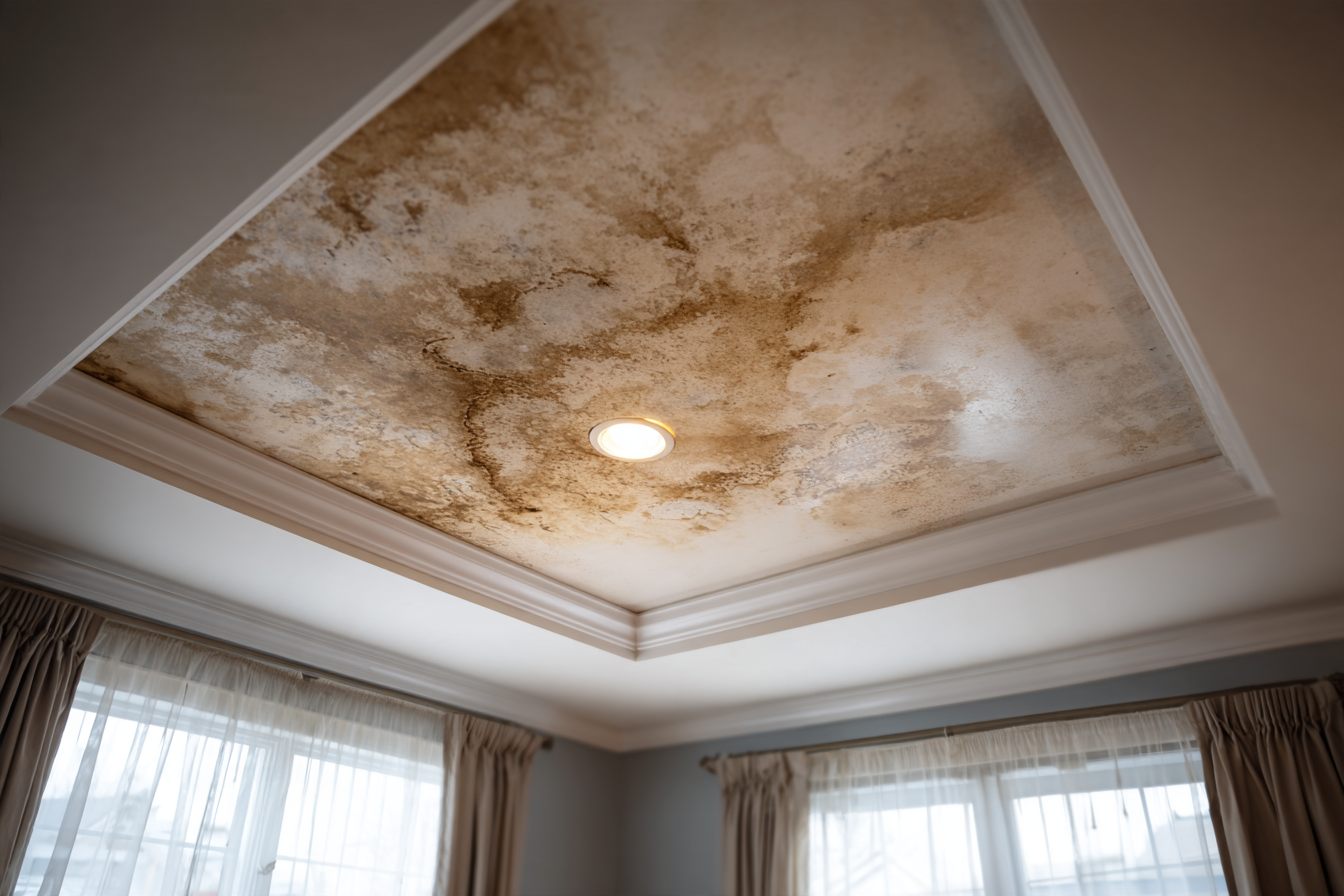
If the Ceiling Is Sagging
A sagging ceiling can hold a surprising amount of water and can give way without warning. Keep people and pets out from under it, move what you can, and put a container below. Don't push on it. The restoration company will usually drain it in a controlled way and remove the wet section so the space above can dry.
Ceiling stained or bulging?
Speak with an Eastside water removal company: (425) 437-2143.
Call (425) 437-2143Upstairs Bathrooms and Laundry Rooms
Second-floor laundry rooms are common in newer Eastside homes, and a split washer hose there sends water straight down. Bathrooms leak more slowly: a toilet seal, a supply line or a shower valve inside the wall can drip for weeks before a stain appears below. More detail in upstairs leaks in two-story homes.
Roof and Gutter Water in a Tree-Heavy Area
Kirkland's tall firs and cedars drop needles all year. Packed gutters overflow along the eaves, and water can back up under roofing or run down inside the top of a wall. Ceiling stains near exterior walls after a storm often trace back to a gutter. See gutters, downspouts and evergreen needles.
How a Wet Ceiling Is Dried and Patched
- Find and stop the source above.
- Measure how far the water spread with meters and a thermal camera.
- Open the wet section of ceiling, and remove soaked insulation if there is any.
- Dry the joists, subfloor and surrounding drywall with air movers and dehumidifiers.
- Patch, texture and paint once readings confirm everything is dry.
Closing a ceiling early traps moisture in the framing, which is how a one-time leak turns into an odor or mold problem.
Is a Water-Stained Ceiling Still Wet Inside?
Often, yes. The surface dries faster than the paper and gypsum behind it, and much faster than the joists above. A moisture meter answers the question in seconds, and that reading decides whether the section has to be opened.
Water Near Light Fixtures and Fans
Water collecting above a ceiling often finds the easiest way down, which is usually a light fixture, a recessed can or a bath fan. If water is dripping from a fixture, switch that circuit off at the panel, don't use the switch on the wall if it's wet, and keep everyone clear. The fixture, the wiring box and the insulation around it will need to dry, and an electrician may need to check the circuit before it's used again. A restoration company will point out what needs an electrician's look.
Textured and Older Ceilings
Many Eastside homes built before the 1980s still have textured "popcorn" ceilings, and some older finishes contained asbestos. Wet texture can sag and fall in sheets. Before a damaged section is cut out, a restoration company may recommend testing the texture so it can be handled safely. That's a short delay worth taking. Plaster ceilings in older homes are another case: they dry slowly but often don't need to come down at all.
How Far the Water Really Went
Water above a ceiling doesn't fall straight down. It runs along the top of the drywall, follows joists, and pools in low spots before it shows. A stain in the living room can come from a bathroom one room over; a wet ceiling corner can trace back to a gutter outside. That's why mapping comes first. Using a moisture meter and often a thermal camera, the technician traces the wet area across the ceiling and up into the floor above, then marks it before anything is opened.
The map decides how big the opening needs to be. Cutting too little leaves wet framing behind; cutting too much means a bigger patch than necessary. It also gives your insurer a clear picture of the damage, which matters when two floors are involved.
Water in the Attic
When roof or gutter water is the source, the attic usually takes it first. Blown-in or batt insulation soaks up water like a sponge and presses it against the ceiling drywall, which is why roof leaks often show up as a wide, faint stain rather than a drip. Wet insulation loses most of its value and holds moisture for a long time, so it's normally removed from the affected area and replaced after the drying. The roof deck and rafters get readings too. Once the roof itself is repaired, the attic is dried and ventilated before the ceiling below is patched.
Who Repairs the Ceiling After It's Dried?
Usually the same restoration company, or a contractor it works with. Once the framing and surrounding drywall read dry, the opening is patched, taped, textured to match and painted. Matching an older texture or a large painted ceiling sometimes means painting the whole room so the repair doesn't show. Ask about that when you go over the scope.
Ceiling Water Help Around the Lake
Kirkland
- Finn HillKirkland
- JuanitaKirkland
- KingsgateKirkland
- Totem LakeKirkland
- Rose HillKirkland
- HoughtonKirkland
- LakeviewKirkland
- Moss BayKirkland
- Market & NorkirkKirkland
- Bridle TrailsKirkland
Nearby
Also see drying & repairs and water damage in Kirkland.