Emergency Water Removal Starts a Longer Job
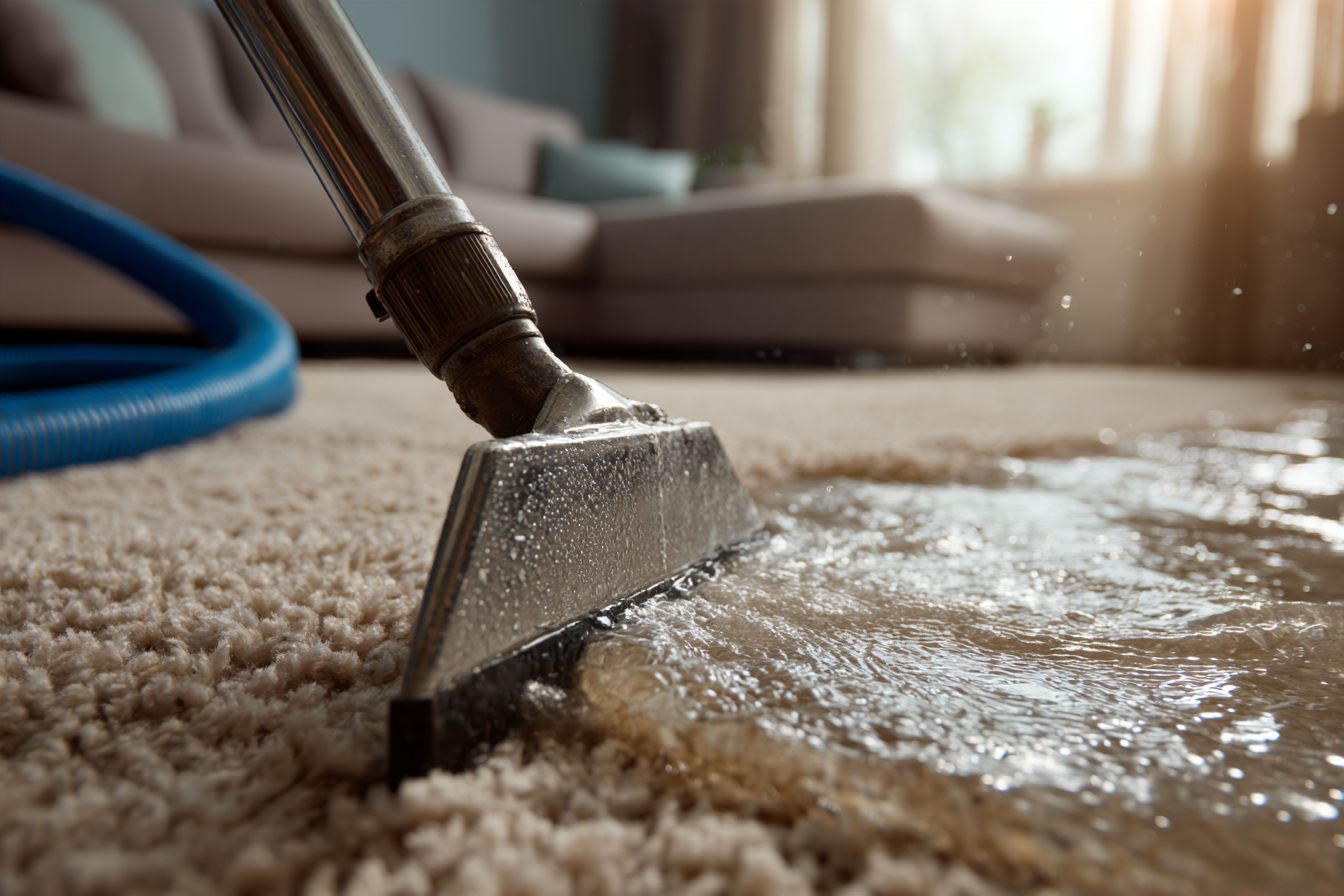
Water extraction, often searched as emergency water removal, is the removal of standing water with submersible pumps, truck-mounted or portable extractors and weighted carpet tools, done before any drying can work. In a Kirkland home with carpeted lower levels and engineered floors, it decides how much of the room can be dried in place and how much has to come out.
The equipment matters because water hides quickly. Carpet looks damp while the pad underneath is saturated. Water slides under laminate and engineered planks and sits on the subfloor. On a lower level, it wicks into the bottom of the drywall and the insulation behind it. A household wet vacuum moves a few gallons; professional extractors pull out far more, including what's trapped in pad and seams.
What the Equipment Does
| Tool | What it's for |
|---|---|
| Submersible pump | Deep water in basements, crawl spaces and garages |
| Truck-mounted extractor | High-volume suction for large carpeted areas |
| Portable extractor | Rooms the hoses from a truck can't reach, upper floors, condos |
| Weighted extraction tool | Pressing water out of carpet and pad before deciding what to keep |
| Moisture meters and thermal camera | Finding where water traveled after the visible water is gone |
Water standing on the floor?
Speak with an Eastside water removal company: (425) 437-2143.
Call (425) 437-2143Water Mitigation: The First Day, Stop by Stop
Extraction is the start of what insurers call water mitigation, the work that stops the damage from growing. A typical first day runs like this:
- The source is stopped and the area is made safe: water off, power to wet areas checked.
- The water is identified: clean supply water, gray water from an appliance, or contaminated water from outside.
- Standing water is pumped and extracted, starting with the deepest areas.
- Moisture is mapped beyond the visible wet area.
- Materials that can't dry in place come out: usually carpet pad and sometimes the bottom of soaked drywall.
- Drying equipment goes in, and the job moves to drying & repairs.
Where Water Hides in Eastside Homes
On a lower level, water runs along the slab under walls and into the next room. Upstairs, it follows joists and comes out as a ceiling stain one room over. In older homes it often drops into the crawl space, where it can sit on the vapor barrier for days. In condos it may move between units. That's why extraction is followed by measurement, not just a look around. More in upstairs leaks in two-story homes.
Household Wet Vacs and Their Limits
A wet vacuum is fine for a small clean spill on tile. It can't keep pace with a burst line, can't pull water out of carpet pad, and can't reach the subfloor under planks or the cavity behind drywall. Water left in those places is what causes cupped floors and musty rooms weeks later. If the water came from outside or a drain, vacuuming it spreads contamination; that kind of water needs cleaning as well as removal.
Why Do the First Hours Matter So Much?
Because materials change quickly once they're soaked. Within a day, drywall softens and flooring begins to swell; past a day or two, wet materials can start to grow mold. Extraction early in that window is what lets more of the house be dried rather than replaced, and it keeps the job smaller on paper too: less removal, fewer days of equipment and a simpler claim.
Clean, Gray or From Outside
Restoration companies sort water into three broad categories, and the category decides how extraction is done.
| Category | Typical Kirkland source | What changes |
|---|---|---|
| Clean | Burst supply line, water heater, ice-maker line | Most materials can be extracted and dried in place if work starts early |
| Gray | Dishwasher or washer discharge, a toilet overflow with no waste | Extracted, then surfaces cleaned; pad and some porous materials removed |
| From outside | Creek overflow, hillside runoff, groundwater through a slab | Porous materials it touched are usually removed; everything is cleaned before drying |
The first category has a short shelf life. After a day or two in carpet and on a warm slab it picks up whatever it soaks through, and the job gets treated more like gray water. That's one more reason extraction is worth starting before anything else.
Extraction in Basements, Crawl Spaces and Condos
Each kind of space needs a slightly different setup. In a finished basement, the technician usually extracts the carpet first with weighted tools, lifts it at a corner to check the pad and the slab, and decides whether the carpet can float on air movers while the pad is replaced. In a crawl space, a submersible pump goes in at the lowest point, and the job continues from the hatch once the standing water is down. Wet insulation hanging under the floor comes out at that stage, because it holds water against the subfloor.
Condos and upper floors are different again. A truck parked at the curb can't always reach a third-floor unit, so portable extractors come up in the elevator. Water that has crossed into a neighboring unit or the ceiling below means the extraction plan covers more than one home, and the building manager usually needs to be involved. More on that in condos and townhomes.
While You Wait for the Restoration Company
You don't need to do much, and you shouldn't try to do the extraction yourself. The useful things are:
- shut off the water at the fixture or the main if the source is still running
- keep everyone out of rooms where water is near outlets, cords or light fixtures
- take photos and a short video of the water before anything is moved
- carry rugs, papers, electronics and small furniture to a dry room
- put aluminum foil or blocks under furniture legs that have to stay
Then leave the rest to the crew. Pulling up wet carpet by hand tends to tear it, and rugs left in a puddle bleed dye into whatever is underneath.
Water Extraction Around the Lake
Kirkland
- Finn HillKirkland
- JuanitaKirkland
- KingsgateKirkland
- Totem LakeKirkland
- Rose HillKirkland
- HoughtonKirkland
- LakeviewKirkland
- Moss BayKirkland
- Market & NorkirkKirkland
- Bridle TrailsKirkland
Nearby
Main page: water damage in Kirkland.