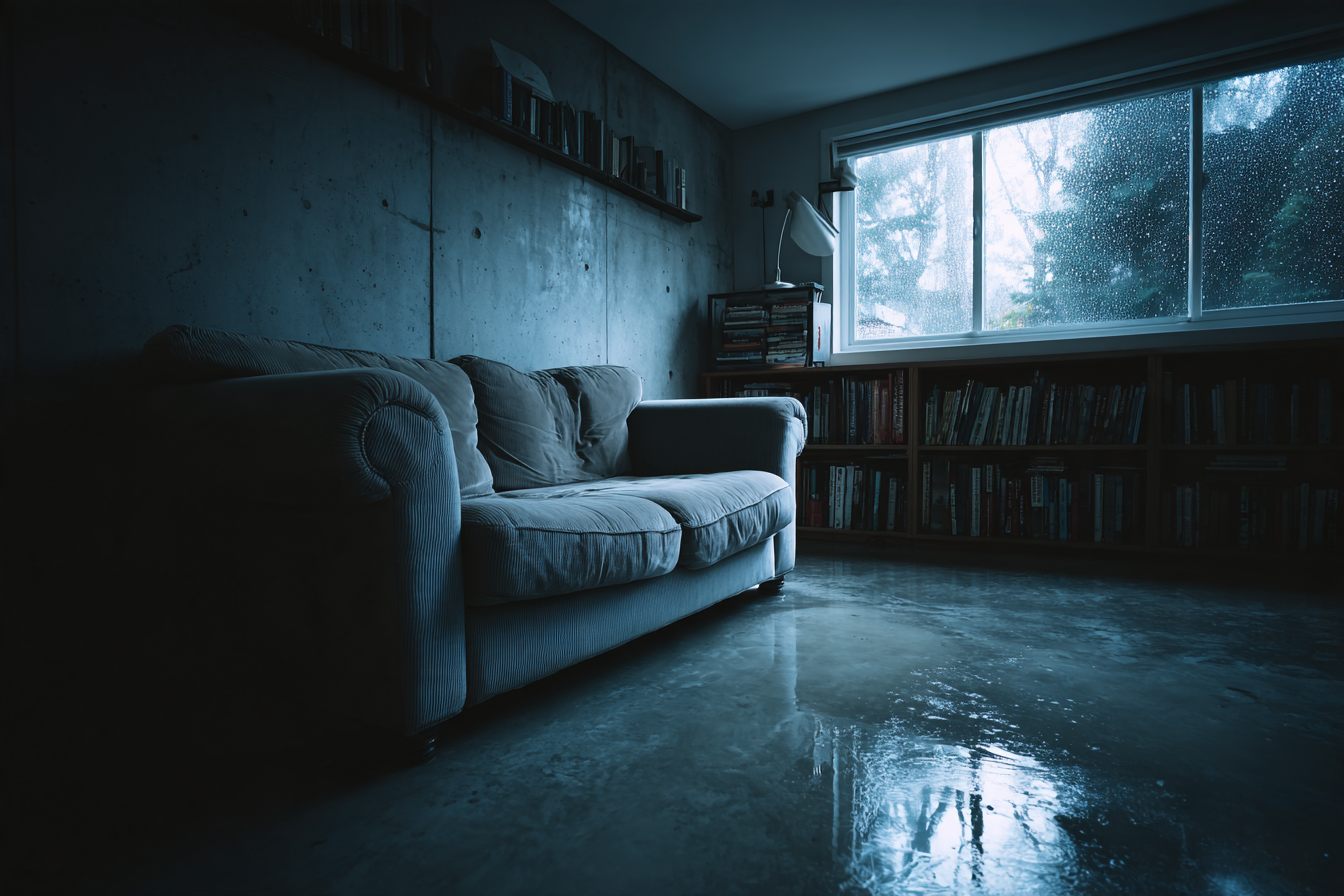
A finished lower level is often the most expensive room in an Eastside house to dry out: carpet over concrete, insulated walls, built-in shelving, a media setup, maybe a bathroom or guest suite. When water gets in, the first instinct can be to tear everything out. In many cases a good part of it can be dried and kept. Here's how those decisions are usually made.
What Decides Keep or Replace?
Three things, mostly:
- What kind of water it was. Clean water from a supply line gives the most options. Water from outside (groundwater, surface runoff, creek water) or from a drain is treated as contaminated, and porous materials it touched usually go.
- How long it sat. Hours versus days changes everything. Long-wet materials swell, delaminate and start growing mold.
- What the material is. Some materials dry well; others never recover once soaked.
Material by Material
| Material | Clean water, dried promptly | Contaminated water, or wet for days |
|---|---|---|
| Carpet | Can sometimes be dried and relaid | Discarded |
| Carpet pad | Usually replaced; inexpensive and holds water | Discarded |
| Drywall | Often dried in place with readings | Cut out above the wet line |
| Wall insulation | Usually replaced where soaked | Replaced |
| Solid wood trim and built-ins | Usually dried | Cleaned and dried if sound |
| Particleboard or MDF built-ins | Usually replaced if swollen | Replaced |
| Luxury vinyl plank | Depends on product; may be lifted, dried and reinstalled | Usually replaced |
| Engineered wood | Depends on core; some delaminate | Usually replaced |
| Furniture and electronics | Case by case | Case by case |
Water in a finished lower level?
Speak with an Eastside water removal company: (425) 437-2143.
Call (425) 437-2143Why Does Drying a Basement Take Longer?
Concrete slabs and below-grade walls hold a lot of moisture and release it slowly, and basement air is cool, which slows evaporation. Expect dehumidifiers and air movers to run several days with daily readings, sometimes longer than a main-floor job of the same size. Shutting down early because the carpet feels dry is the most common way a lower level ends up smelling musty a month later.
How Can You Avoid Losing More Than You Need To?
- Get extraction started fast; it's the single biggest factor. See water extraction.
- Move furniture, electronics, papers and rugs off the wet floor and out of the room.
- Don't pull up carpet yourself; wet carpet tears, and the restoration company may be able to save it.
- Photograph everything before it's moved, for the claim.
The "Flood Cut"
When drywall has to come out, restoration companies usually cut it in a straight line a little above the highest wet reading, often a foot or two up the wall. That's called a flood cut. It opens the cavity so the insulation can come out and the studs and bottom plate can dry, and it gives a clean edge for the repair. A straight cut along the whole wall is easier to patch invisibly than ragged holes in random places.
Built-Ins, Bars and Media Walls
Finished lower levels often have custom features: a wet bar, a wall of shelving, a media center or a built-in desk. Solid wood pieces usually survive if they're pulled away from the wall or opened up so air can reach behind them. Pieces built from particleboard or MDF swell at the bottom edge and rarely recover. Electronics should be unplugged and moved to a dry room; don't turn them back on until they've been checked.
Bathrooms and Guest Suites Downstairs
A lower-level bathroom adds tile, a vanity and a toilet to the list. Tile over a slab usually comes through fine; the vanity base and the drywall behind it are what need attention. If the water came from the drain in that bathroom, treat it as contaminated: porous materials it reached are usually removed, and surfaces are cleaned before drying.
Rugs, Boxes and Things Stored on the Floor
Lower levels are where most households keep their storage, and cardboard boxes are the first thing to fail. They wick water up from the floor, collapse, and soak whatever is inside. Move them to a dry room, open them, and spread out papers and photos to dry or freeze them for later. Area rugs, especially wool or handmade ones, are best sent to a rug cleaner rather than dried in place. Make a list with photos as you go; it helps with any contents claim.
How Do You Know the Basement Is Really Dry?
By the readings, not the feel. Concrete, framing and drywall should match the dry standard from an unaffected area of the house. Ask for the final readings in writing. They're what you'll want if you ever sell the house, and what an adjuster uses to close the claim.
If It Keeps Happening
Repeated water in a finished basement usually means a drainage cause: footing drains, gutters, grading or a failing sump. Fix the cause before rebuilding the finishes. See hillside drainage and sump pumps and outages.
Where Finished Lower Levels Are Common
Rose Hill, Bridle Trails, Sammamish and many split-levels and daylight basements across Kirkland. More on lower-level water: basements & crawl spaces.
Hardwood and Engineered Floors After Water
How flooring decisions get made, and what to avoid in the first days.
Sump Pumps, Windstorms and Power Outages
Keeping a lower level dry when the power goes out.