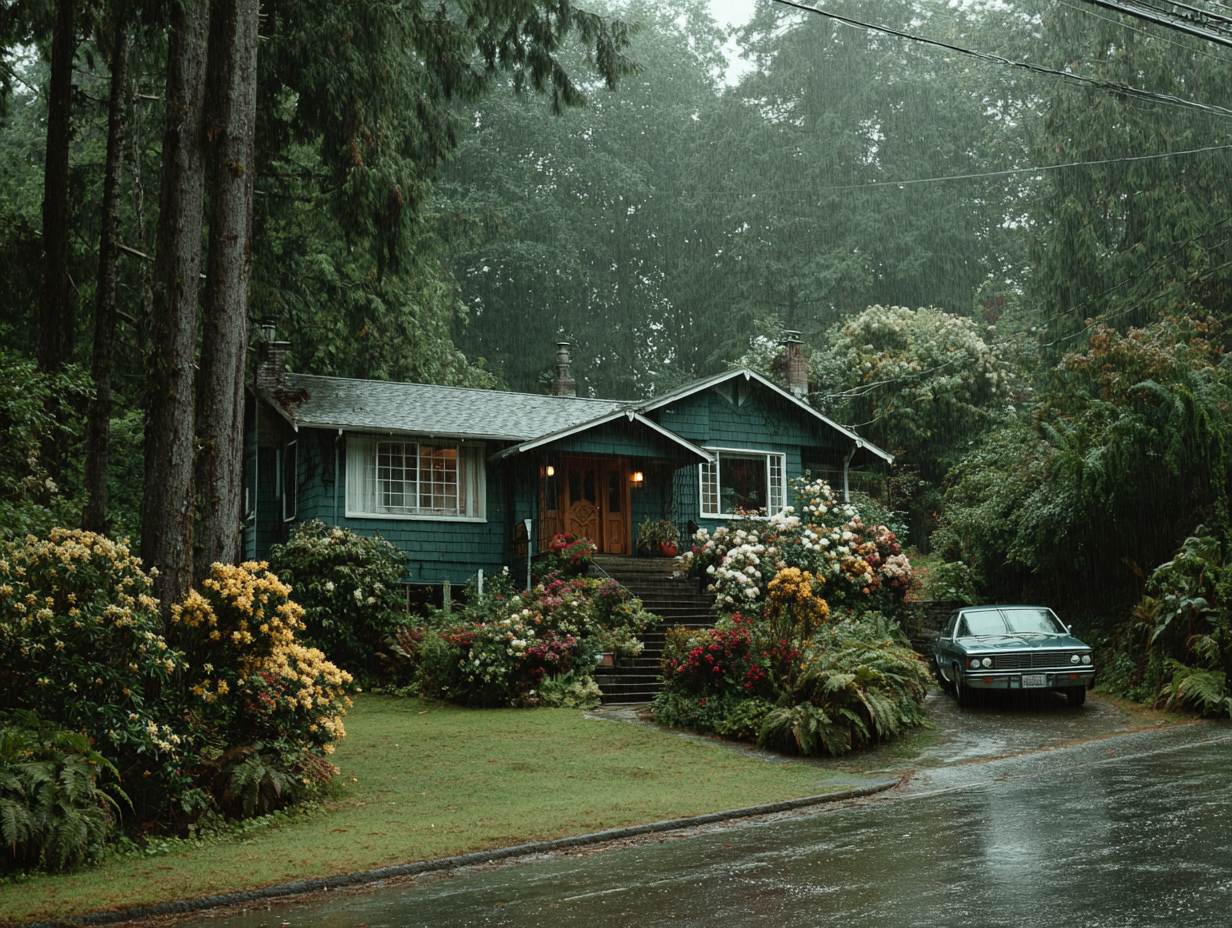
A lot of Kirkland is built on slopes. Homes step down toward Lake Washington, daylight basements open onto downhill views, and the uphill side of many houses sits partly buried in the hill. That design gives great views and more living space. It also means rainwater moving down the slope meets a wall of the house on its way.
How Does Water Get In on a Sloped Lot?
Rain that falls uphill travels down through the soil and across the surface. When it reaches the house, it collects against the uphill foundation wall. If the ground is saturated and the drainage around that wall is clogged, missing or overwhelmed, water pushes through gaps where the wall meets the slab, through old cracks, or around utility penetrations, and appears inside the lower level.
The Usual Weak Points
| Weak point | What happens |
|---|---|
| Footing drains | Perforated pipes along the foundation that clog with silt and roots over decades |
| Downspouts emptying beside the house | Roof water added right where the soil is already wettest |
| Patios and walkways sloping toward the house | Surface runoff directed at the wall |
| Window wells on the uphill side | Fill with water and seep in at the window |
| Retaining walls without drainage | Water builds up behind them and finds a way through |
Water along the uphill wall?
Talk it through with a local restoration company: (425) 437-2143.
Call (425) 437-2143What Are the Signs of a Hillside Drainage Problem?
Damp or dark carpet along one lower-level wall after rain, efflorescence (a white, chalky crust) on concrete, peeling paint at the base of the wall, a musty smell that comes and goes with the weather, and water in a window well. The pattern is the giveaway: it gets worse during long storms and fades in summer.
Who Fixes What?
Two jobs, usually done by two kinds of companies:
- The water damage: extraction, removing wet pad and insulation, drying the wall cavity and slab, and repairing finishes. That's restoration work. See basements & crawl spaces.
- The cause: footing drains, regrading, downspout extensions, drainage behind retaining walls or waterproofing. That's for a drainage or waterproofing contractor.
Doing the second without the first leaves wet framing behind; doing the first without the second means it happens again next winter.
Drying a Partly Buried Room
Below-grade walls stay cool, and cool surfaces dry slowly. Restoration crews usually remove the lower part of wet drywall on the affected wall so the cavity and the back of the concrete can dry, then run dehumidifiers and air movers with daily readings. Finished lower levels with carpet and built-ins need the most care. See what can be saved in a finished basement.
The Neighbors Uphill
On a hillside, your drainage is partly shaped by the lots above you. A new driveway, patio or addition uphill can send more runoff your way, and a neighbor's downspouts may empty toward your yard. Those changes can explain why a lower level that stayed dry for years starts taking on water. It's worth a friendly conversation, and in some cases the city's surface water rules apply. Kirkland's public works department can explain what's allowed where runoff crosses property lines.
Slopes and Soil Movement
Saturated hillsides can also move. Small slides and slumps happen on steep Eastside slopes during long wet winters, and the signs (new cracks in the ground, tilting fences or retaining walls, doors that suddenly stick) are worth reporting to a geotechnical engineer, not a restoration company. If the ground near the house is moving, stay out of the affected rooms and call the city.
Why Do Footing Drains Fail?
Footing drains are perforated pipes laid beside the base of the foundation, usually wrapped in gravel, that carry groundwater away. Over decades, silt fills the gravel, tree roots grow into the pipe, and joints separate. On older homes the drains sometimes connect to downspouts, which sends roof water and debris into the same pipe. A drainage contractor can run a camera through them to see what's going on. A failed footing drain is one of the most common reasons a hillside lower level starts leaking after many dry years.
What Can Wait and What Can't
The drainage fix can often wait for drier weather; contractors usually prefer to dig when the ground isn't soaked. The water damage can't. Wet carpet pad, insulation and drywall on the uphill wall should be extracted and dried as soon as the water is found, even if the cause won't be fixed for months. Ask the restoration company to note where the water came in and photograph it; the drainage contractor will want that information.
Where This Is Common
Sloped lots are the rule in Finn Hill and Houghton, and common in Lakeview and on the edges of the Sammamish plateau.
Before Next Winter
Have the footing drains checked, extend downspouts well away from the house, regrade soil to slope away from the uphill wall, and keep window wells clear. Then watch that wall during the first long storm of the season.

Atmospheric Rivers and Eastside Homes
Why multi-day storms cause more damage than a single heavy one.
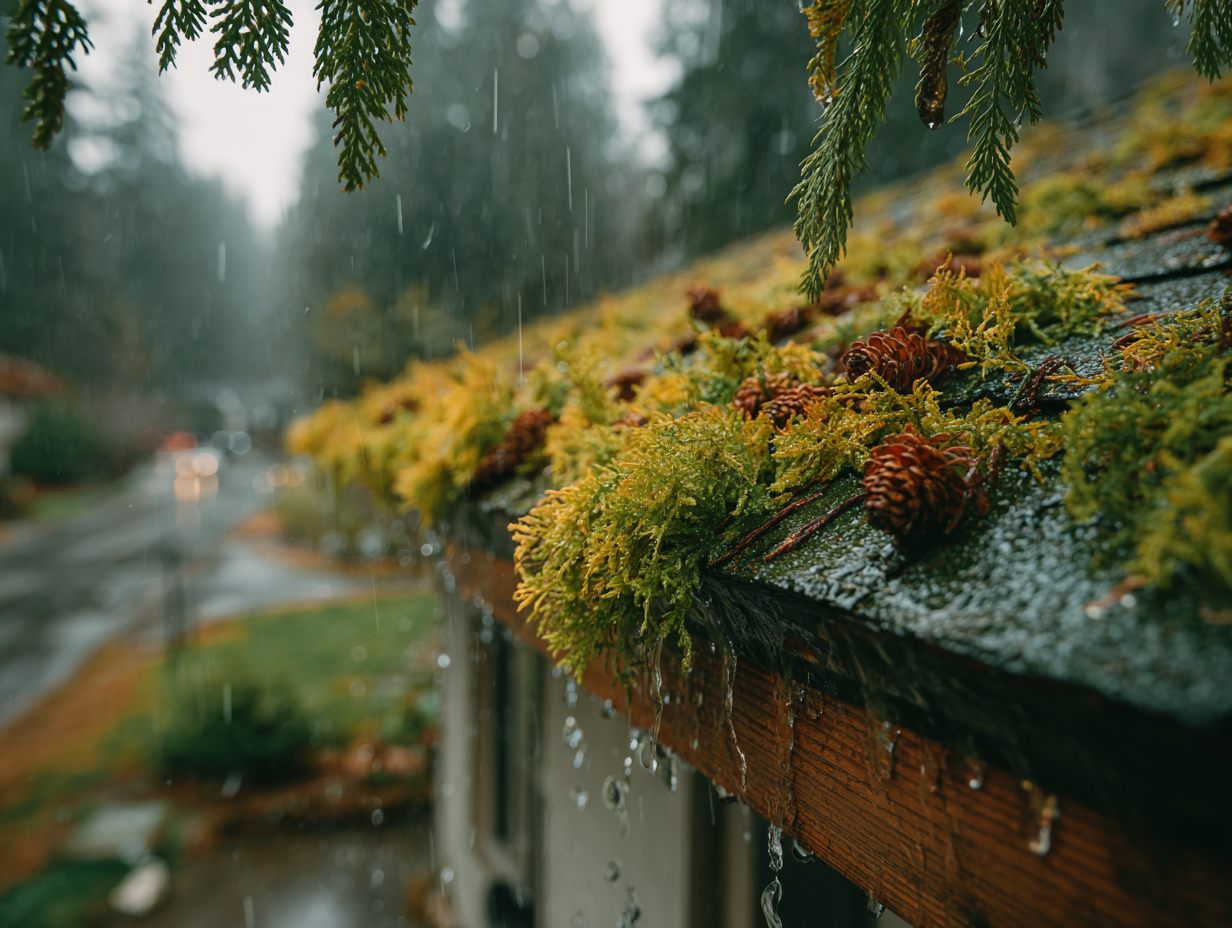
Gutters, Downspouts and Evergreen Needles
A fall and winter routine for tree-heavy lots.