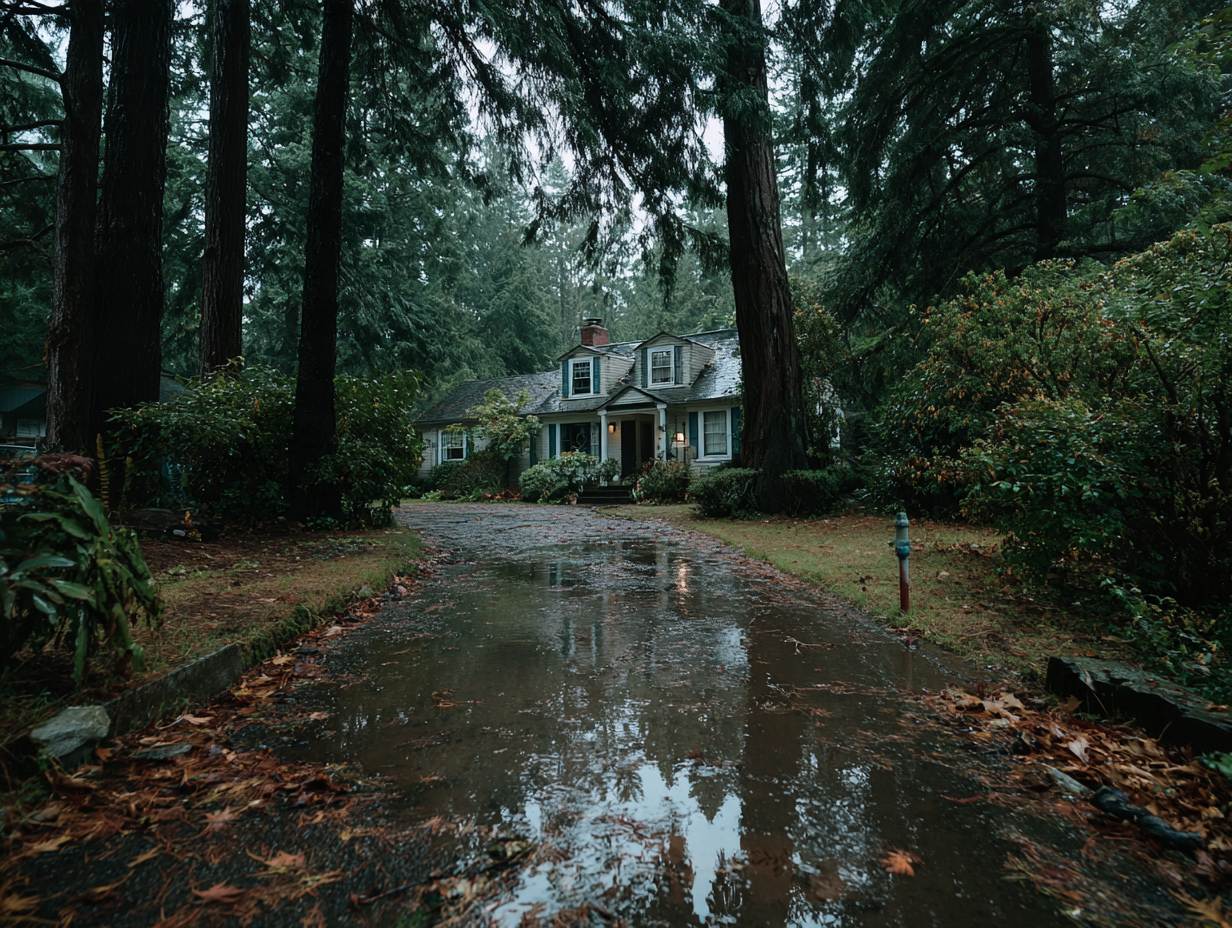
Kirkland isn't a river town, but it is a creek town. Two creek systems drain much of the north half of the city into Juanita Bay, and during long winter storms they carry far more water than usual. Most homes are never touched by it. The ones close to the channels and in low spots along them can see water in yards, garages, crawl spaces and lower levels. When people search "Kirkland flooding" in a storm, this is usually what they mean.
The Two Basins
Forbes Creek drains a basin of roughly 1,800 acres, about a quarter of Kirkland's land area, before it reaches Juanita Bay. Juanita Creek runs about five miles, collecting tributaries like Billy Creek on Finn Hill, and enters the bay at Juanita Beach Park. Both basins are heavily developed. Roofs, driveways and streets send rain into storm drains and creeks quickly instead of letting it soak in, so the creeks respond fast to heavy rain.
When Do Kirkland's Creeks Run High?
Usually in the wettest stretch of the year, November through February, and especially when several days of heavy rain arrive back to back. A single downpour on dry ground rarely causes much trouble. A long atmospheric river on ground that's already saturated is what pushes water out of the channels and into low-lying yards. See atmospheric rivers and Eastside homes.
The city has dealt with this before. In December 2010, Kirkland's Public Works Department monitored flooding of homes along Billy Creek in the Finn Hill and North Juanita area while responding to road and waterway flooding across the city.
Water got in during a storm?
Speak with an Eastside water removal company: (425) 437-2143.
Call (425) 437-2143Which Homes Feel It?
| Situation | Typical water damage |
|---|---|
| Lots beside a creek channel or culvert | Yard and garage flooding; water at the foundation |
| Low spots along a creek's path | Crawl spaces and lower levels taking on water |
| Homes downhill from big hard surfaces | Runoff overwhelming yard drains and window wells |
| Houses near Juanita Bay | High groundwater under floors through the wet season |
Neighborhoods that sit in these basins include Juanita, Finn Hill and parts of Kingsgate and Totem Lake.
What to Watch During a Storm
- Water rising in the creek or ditch near your property, or backing up at a culvert
- Yard drains and window wells filling faster than they empty
- Water at the base of the garage door or along a lower-level wall
- Your crawl space, checked with a flashlight from the hatch after the heaviest rain
- Local alerts from the City of Kirkland and King County
Stay out of moving water, and keep away from creek banks during high water; they can be undercut and unstable.
Is Creek Water Different From a Pipe Leak?
Yes. Water that comes over a creek bank or up from the ground is treated as contaminated. It can carry soil, street runoff and anything else in the basin. Porous materials it soaks, like carpet, pad, insulation and the lower part of drywall, are usually removed rather than dried, and the remaining surfaces are cleaned before drying starts. Clean water from a burst supply line, by contrast, can often be dried in place if work starts quickly.
Does Insurance Cover It?
Standard homeowners policies usually exclude flooding from surface water and overflowing waterways; that's what separate flood policies are for. Groundwater seepage is often excluded too. Water that enters because a gutter or downspout failed, or a pipe broke, may be treated differently. Document everything with photos before cleanup and read what adjusters want to see.
Why Development Changed How the Creeks Behave
Before the Eastside filled in with houses and roads, most rain soaked into forest soil and reached the creeks slowly, over days. Now a large share of it lands on roofs, driveways and streets and is piped straight to the channels. The creeks rise faster and higher during storms and drop faster afterward. Kirkland and King County have spent years on culvert replacements, stormwater ponds and stream restoration in both basins, which helps, but it can't fully undo the change. Homes near the channels still see high water during the biggest storms.
Culverts and Road Crossings
A lot of local flooding starts where a creek passes under a road. Culverts can clog with branches, leaves and sediment during a storm, and water then backs up and spreads across nearby yards and streets. If you see a culvert near your home blocked or overtopping, report it to the City of Kirkland's public works department rather than trying to clear it yourself in high water.
Garages and Lower Levels Near the Channels
Garages are often the first part of a house to take on creek water, because they sit at grade and have wide doors. From there water can move under an interior door into a finished lower level or a utility room. Things stored on a garage floor (boxes, a spare freezer, holiday decorations) are usually what's damaged first.
Before the wet season, put stored items on shelves or pallets, keep the area at the garage door clear so you can see water arriving, and know which rooms connect to the garage at floor level. If water does come in, keep the door between the garage and the house closed, and don't walk through water where cords or appliances are plugged in.
Creek Water, Groundwater or Both
Homes close to a creek often see both at once. Overflow comes over the surface, while groundwater rises underneath because the whole basin is saturated. The difference matters for cleanup and for insurance, and it isn't always obvious from inside the house. A restoration company's readings and a look at where water entered usually sort it out. More on the underground side: waterfront lots and high groundwater.
Flood Cleanup After the Water Goes Down
Get standing water out and drying started as soon as it's safe. Flood cleanup after creek water is more than pumping: porous materials it soaked usually come out, surfaces are cleaned, and the structure is dried with readings. Photograph the flood damage before anything is moved. Lower levels and crawl spaces hold moisture for a long time in cool, damp weather, and waiting is what turns a wet room into a moldy one. The process is on water extraction and basements & crawl spaces.
Atmospheric Rivers and Eastside Homes
Why multi-day storms cause more damage than a single heavy one.
Waterfront Lots and High Groundwater
Living close to the lake: dampness that isn't a leak.